
Listen to article
Dream Symbolism in Ancient Cultures: From Egypt to Mesoamerica
Every night, when we close our eyes, we enter a territory that humanity has tried to understand for millennia. Long before Freud published The Interpretation of Dreams in 1899, entire civilizations built temples, trained priests, and wrote books dedicated to deciphering what happens when we sleep.
What's remarkable isn't just that every ancient culture took dreams seriously — it's that many reached strikingly similar conclusions: dreams are messages, bridges between the visible and the invisible, and those who learn to read them gain an advantage over those who ignore them.
This is a journey through five dream traditions that, separated by oceans and centuries, shared a deep conviction: dreaming is far more than sleeping.
Mesopotamia: Where It All Began
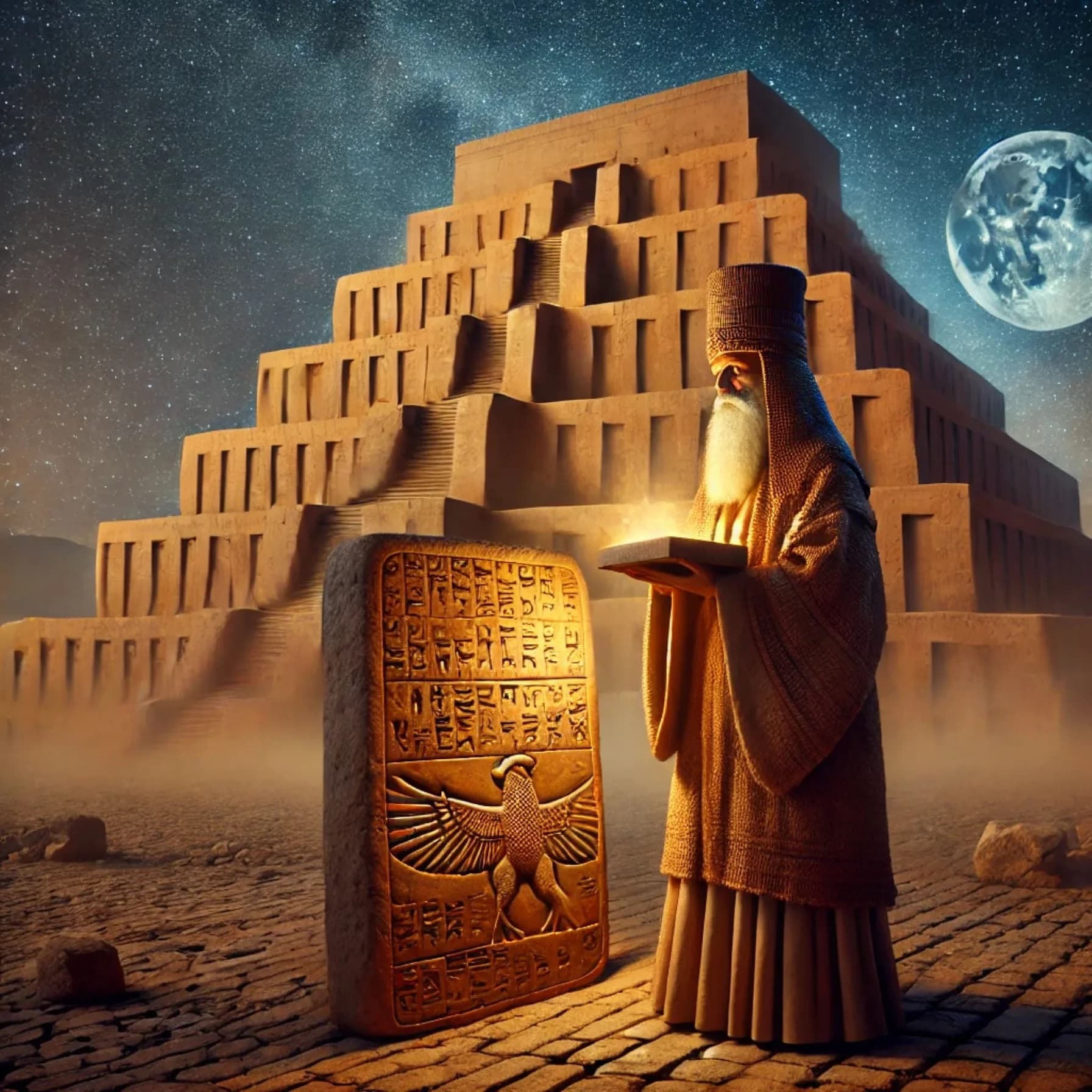
The earliest evidence of dream interpretation comes from Sumerian clay tablets, with records dating back to at least 3100 BCE. For the peoples of Mesopotamia — Sumerians, Babylonians, and Assyrians — dreams were supernatural events with the power to predict the future.
The Mesopotamians divided dreams into two categories: those sent by the gods, considered good, and those sent by demons, considered bad. This wasn't a philosophical distinction but a practical one: a bad dream required immediate action. Specific purification rituals existed where the dreamer could "dissolve" the dream in water, neutralizing its negative effect.
The Iškar Zaqīqu, a collection of dream omens, cataloged different dream scenarios alongside their prognoses, drawing on previous cases where people had experienced similar dreams with different outcomes. Themes included everyday events, journeys, family matters, encounters with animals, and appearances of deities.
Kings paid special attention to their dreams. Gudea, king of the city-state of Lagash (circa 2144–2124 BCE), rebuilt the temple of Ningirsu as a direct result of a dream. And in the Epic of Gilgamesh, one of humanity's oldest literary texts, prophetic dreams drive the narrative: Gilgamesh dreams of Enkidu's arrival before ever meeting him.
Perhaps most remarkably, the Assyrians anticipated something akin to modern psychoanalysis over three thousand years ago: they believed that once a disturbing dream's enigma was deciphered, the symptoms or affliction would pass. The difference from contemporary psychology is that where we look for repressed internal conflicts, the Assyrians looked for demons to exorcize or deities who would reveal the path to healing.
Egypt: Sacred Beds and Dream Papyri
For the ancient Egyptians, the dream world existed in a liminal space between the land of the living and the afterlife — a territory inhabited by deities and spirits of the dead. Dreams were oracles, direct messages from the gods.
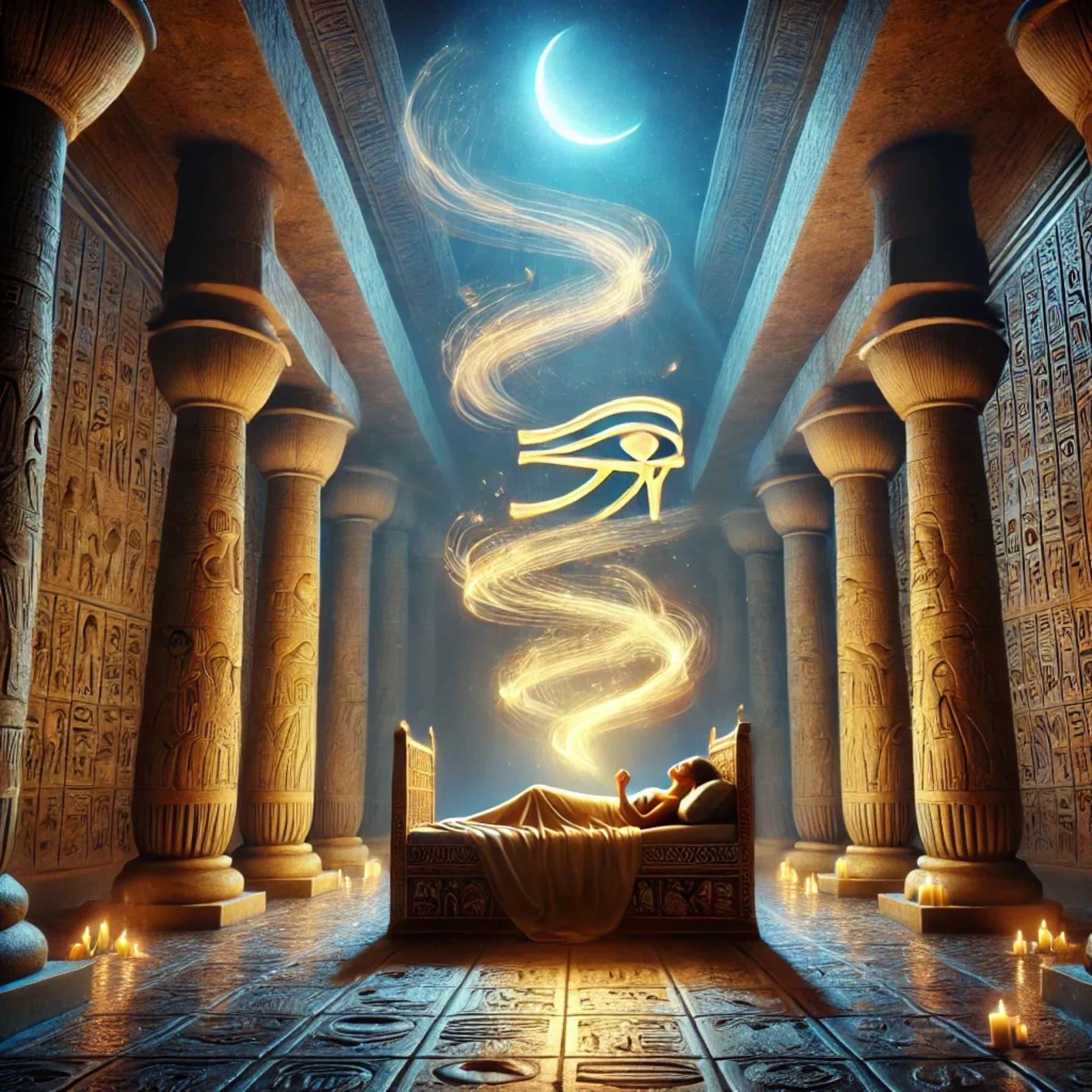
So convinced were they of this power that they developed the practice of dream incubation: Egyptians would go to sanctuaries and sleep on special "dream beds," hoping to receive divine advice, comfort, or healing. They didn't go to sleep for rest — they went for revelation.
The oldest surviving dream manuscript is the so-called "Ramesside Dream Book," now in the British Museum. It contains a codified interpretation system where each image had an assigned meaning. Dreaming of the moon, for example, was a positive sign — it meant the gods were forgiving you. But seeing yourself in a mirror during a dream was a bad omen, signaling the loss of a partner.
The Egyptians distinguished between dreams that communicated directly and those requiring professional interpretation. Message dreams conveyed clear instructions, like the famous story of Thutmose IV: as a young man, he fell asleep in the shadow of the Sphinx, which asked him in a dream to clear away the sand covering it, promising him the throne of Egypt in return. The stela commemorating this dream still stands between the Sphinx's paws.
A linguistic detail reveals how deeply the Egyptians understood the nature of dreaming: the Egyptian word for "dream" contains the root rs, meaning "to awaken," and was written with hieroglyphs depicting a bed and an open eye. In other words, for the Egyptians, a dream was literally an awakening within sleep — an astonishingly precise description of what we now call dream consciousness.
Greece: Between Gods and Science
Greece represents a fascinating turning point in the history of dream interpretation because here, religious tradition and rational thought coexisted — sometimes with tension.
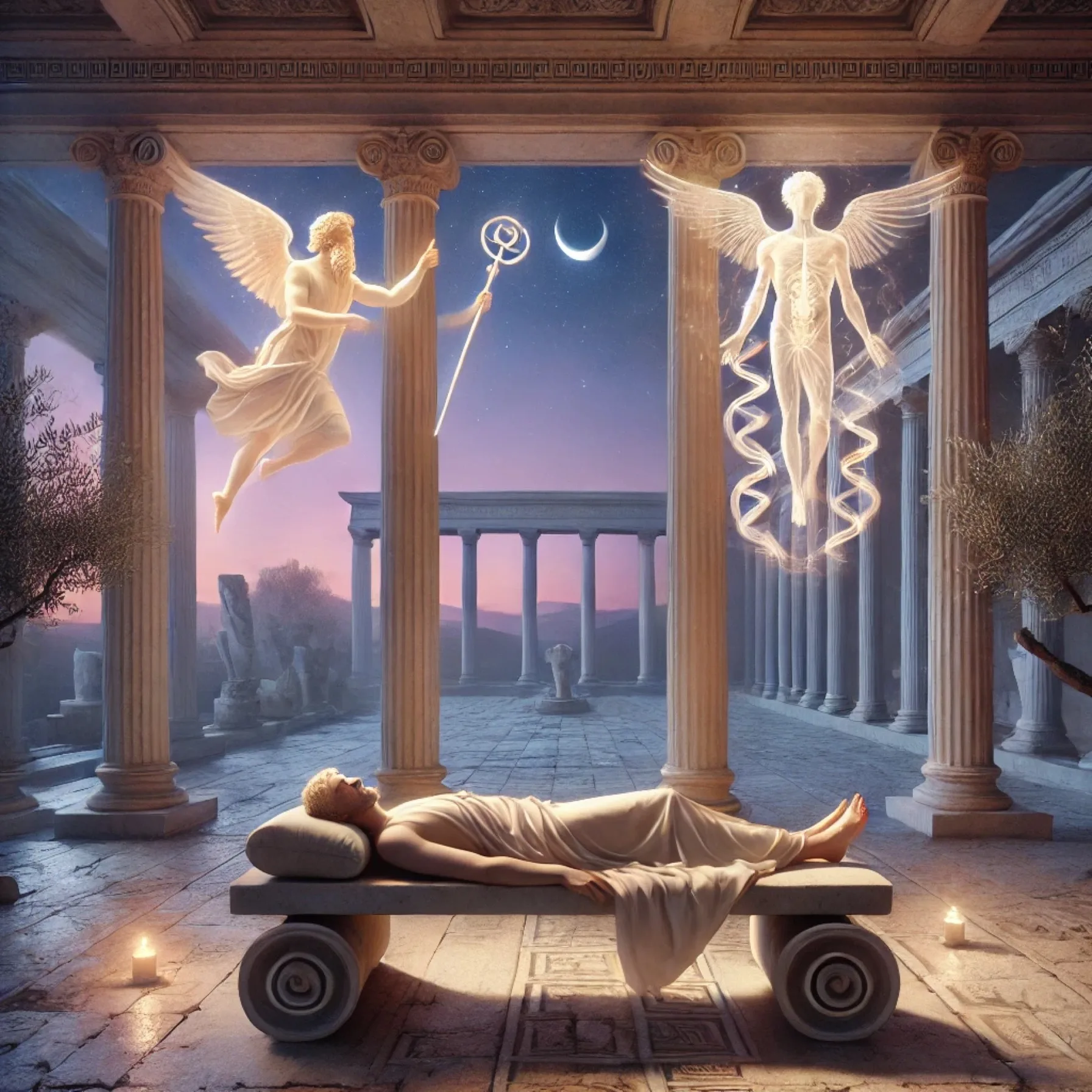
In the Homeric tradition, dreams were sent by the gods. Figures in human form would appear before the sleeper and deliver direct messages. But the Greeks also developed a sophisticated interpretation industry: numerous dream oracles existed where priests interpreted the dreams of those seeking information about the future. The practice of incubation, likely inherited from Egypt and Mesopotamia, flourished in temples dedicated to Asclepius, the god of medicine, where the sick slept hoping for healing dreams.
Artemidorus of Daldis, in the 2nd century CE, wrote the Oneirocritica, probably antiquity's most influential dream interpretation treatise. His approach was almost scientific: he classified dreams, analyzed their symbols in context, and proposed interpretations based on accumulated experience.
But it was Hippocrates who broke with the divine paradigm. He proposed that dreams came not from the gods but from the body itself: they were manifestations of our bodily functions filtered through the mind. If you dreamed of rain or hail, for example, it meant you suffered from excess phlegm. An interpretation that seems naive in its details by today's standards, but revolutionary in its premise: dreams speak about ourselves, not about the gods.
Cicero was one of the ancient world's few skeptics regarding prophetic dreams, but his was a minority voice. For most of Greco-Roman civilization, ignoring a significant dream was as reckless as ignoring an oracle.

Discover what your dreams mean with the wisdom of ancient cultures and artificial intelligence.

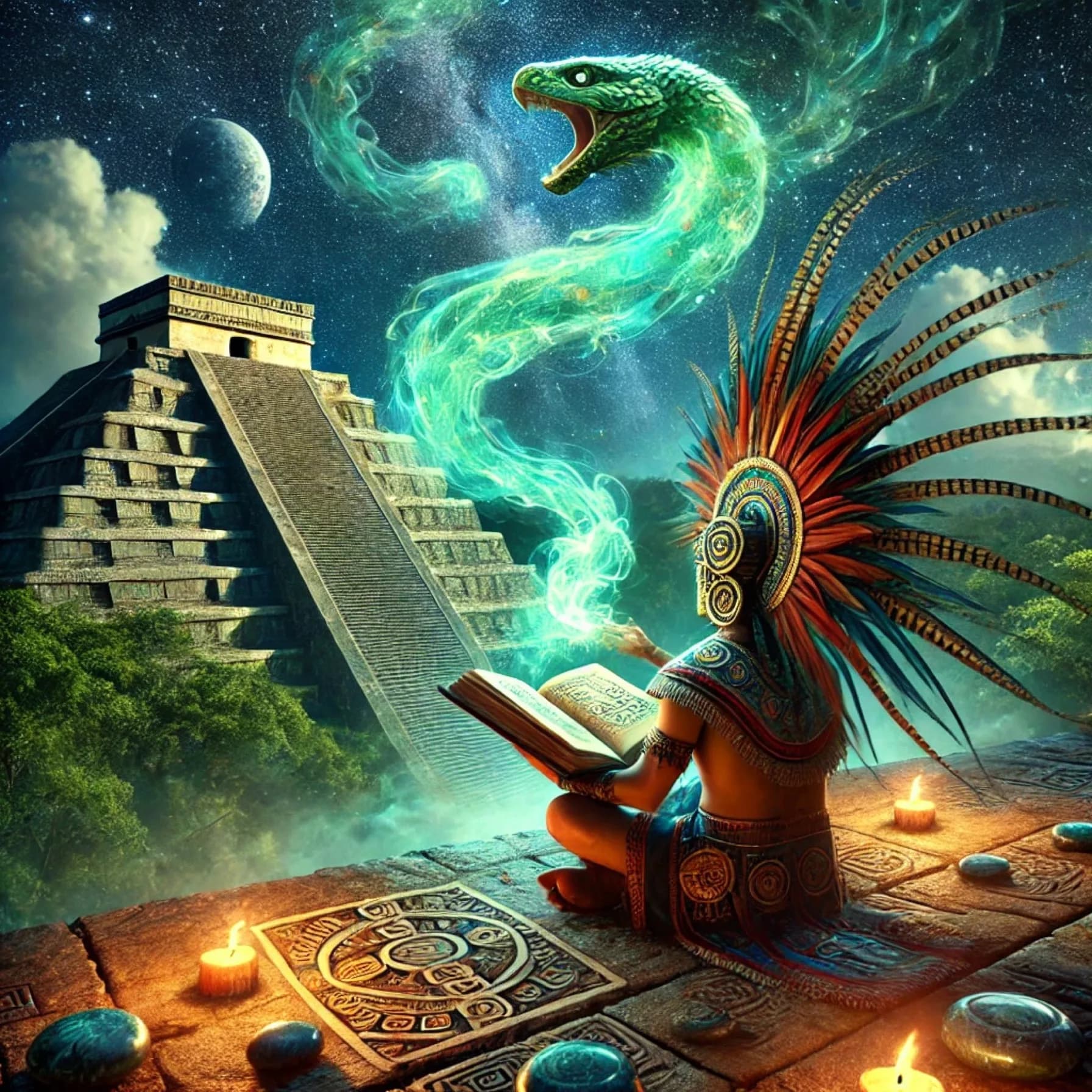
Mesoamerica: Dreams as Sacred Gift
For Mesoamerican cultures — the Mexica (Aztecs), Maya, and Toltecs — dreams occupied a central place in spiritual, political, and daily life. And it's here that the dream tradition acquires a depth and sophistication that is often overlooked.
The Aztecs regarded the ability to dream, to see in dreams, and to acquire knowledge through them as a sacred gift. Specific terms existed in Nahuatl to distinguish between "truthful" and "untruthful" dreams, demonstrating a nuanced understanding of the dream phenomenon. The concept of temixoch — literally "blossom dream" — described something equivalent to what we now call lucid dreaming: a state of full consciousness within the dream, controlled at will.
Before the Spanish invasion, the Mexica compiled specialized books describing different types of dreams and their meanings, all encoded in pictographic figures and characters. Masters existed who dedicated themselves exclusively to interpreting these books. The mass destruction of indigenous libraries during the conquest meant an incalculable loss of this knowledge.
The Aztec dream world was deeply connected to the supernatural. Dreams influenced decisions about war, harvests, relationships, and even the fate of prisoners. Dreaming of Quetzalcoatl, the feathered serpent, was considered a sign of divine favor and wisdom. Rain in dreams foretold prosperity; serpents signaled danger or deceit. Each dream symbol was linked to specific gods or natural forces.
The Maya, meanwhile, believed that dreams should be shared with the community, not kept secret. They saw them as omens — not to be feared but to be acted upon. The Maya even gave thanks for nightmares, understanding them as warning signals that, if heeded in time, could change the course of events.
In Mesoamerican cosmology, dreams were also vehicles for spiritual travel. Trained sorcerers were believed to use their dreams as a medium for journeying through the underworld and traversing the layers of reality: the thirteen heavens and nine underworlds. Mirrors, lakes, and reflective surfaces were considered portals to the underworld, especially accessible during dreaming.
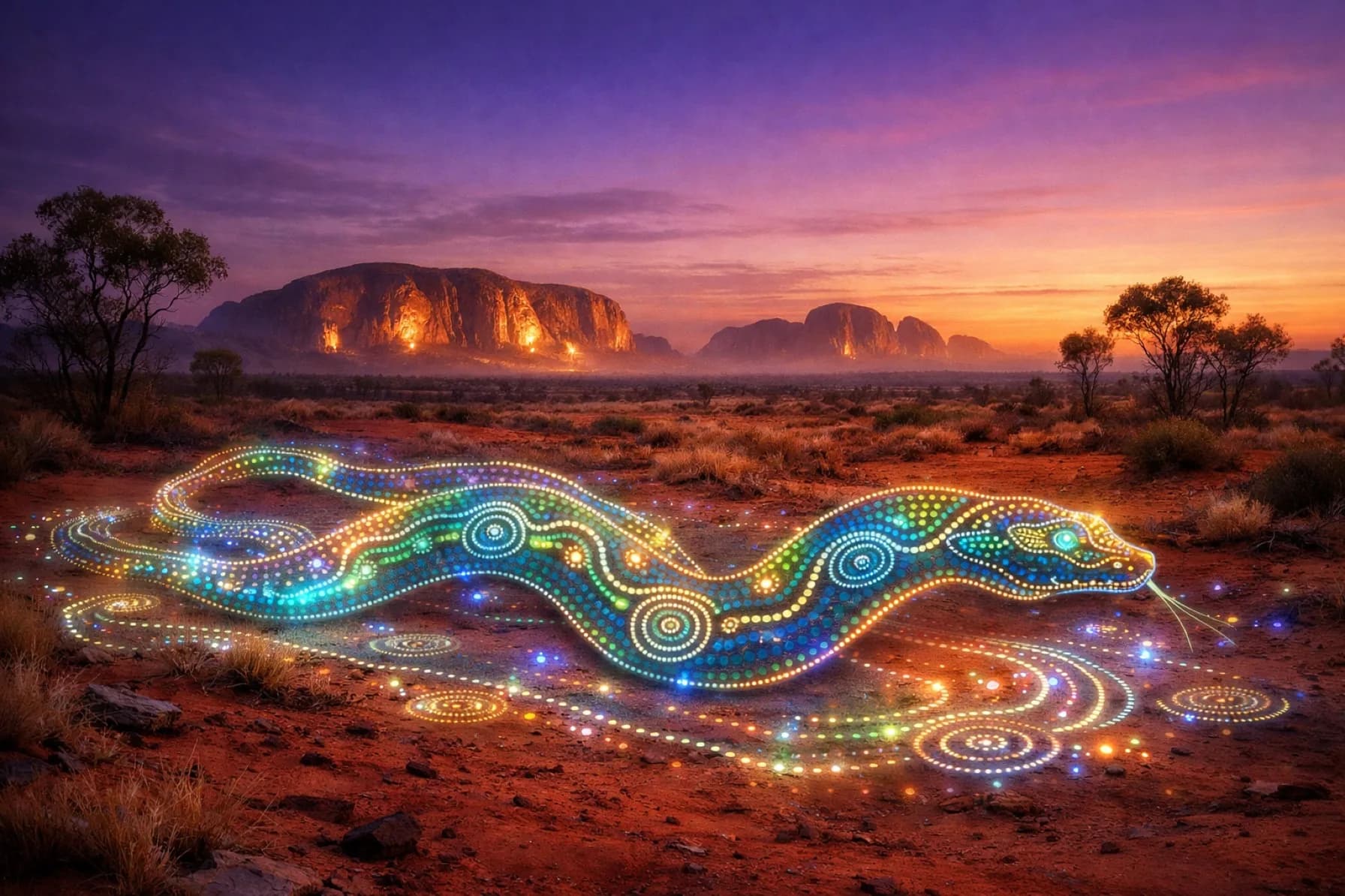
Aboriginal Australia: The Dreaming, Where to Dream Is to Create
No culture has taken the relationship between dreams and reality as far as the Aboriginal peoples of Australia, whose continuous cultural tradition is the oldest on the planet — at least 50,000 years.
The concept of the Dreaming (or Jukurrpa in Warlpiri, Alcheringa in Arrernte) has no direct translation into English or any European language. It's not a "dream time" in the past, as it's often oversimplified, but something far broader: a complete framework of reality encompassing creation, law, morality, ecology, and identity.
According to Aboriginal cosmology, during the Dreaming, ancestral beings emerged from a formless land and, through their journeys and actions, created everything that exists: rivers, mountains, animals, plants, and people. These ancestral beings don't belong to the past — they are spiritually as alive today as they ever were. The places where they acted became sacred sites, and the routes they traveled form the songlines — sung paths that cross the entire continent.
What makes the Dreaming unique is that it doesn't separate dream from waking, past from present, or creation from daily life. The Dreaming isn't a period that ended but a continuum encompassing past, present, and future. In fact, none of the hundreds of Australian Aboriginal languages contains a word for "time" in the linear Western sense.
Each Aboriginal person has their own particular Dreaming — Kangaroo Dreaming, Shark Dreaming, Honey Ant Dreaming — that defines their identity, kinship relations, and obligations to the land. Nightly dreams are one means of connecting with this personal and communal Dreaming, but the concept goes far beyond the experience of sleeping.
The Invisible Thread: What Connects All Traditions
When comparing these five traditions, patterns emerge that transcend borders and eras:
Dreams as communication. From Mesopotamian clay tablets to Aboriginal ceremonies, every culture understood dreams as messages — whether from gods, ancestors, spirits, or the body itself.
The need for expert interpretation. In every civilization, professionals were dedicated to deciphering dreams: priests in Egypt, scribes in Babylon, oracles in Greece, codex masters in Mexico, elders in Australia. Dreaming was easy; understanding was an art.
Incubation: actively seeking dreams. Egyptians, Mesopotamians, and Greeks shared the practice of sleeping in sacred places to provoke revelatory dreams. Mesoamerican peoples used plants like Calea zacatechichi for similar purposes.
Good and bad dreams require different actions. The Babylonians dissolved bad dreams in water. The Maya gave thanks for nightmares as warnings. The Greeks sought healing in the temples of Asclepius. In every tradition, a significant dream demanded a response.
The dream-reality connection isn't metaphorical. For these cultures, dreams weren't "just dreams." They were as real as waking life, and sometimes more revealing.
Why This Matters Today
We live in an era that has rediscovered interest in dreams. Neuroscience confirms that dreaming serves crucial functions for memory, learning, and emotional processing. Psychology recognizes the therapeutic value of working with dreams. And more people than ever are seeking to reconnect with this dimension of human experience.
What ancient cultures remind us is that dream interpretation isn't a modern fad — it's one of humanity's most universal and ancient practices. And the wisdom accumulated over millennia, across traditions as diverse as Egyptian and Mesoamerican, remains relevant.
Because in the end, the question posed by the priests of Karnak, the scribes of Nineveh, the Nahua masters, and Aboriginal elders is the same question you ask yourself when you wake from a dream that feels important:
What does this mean?
SenseDreams combines this ancestral wisdom with artificial intelligence to offer you deep cultural interpretations of your dreams. Each analysis connects your dream experiences with traditions from around the world — from Mesoamerican echoes to universal archetypes.

Explore the language of your dreams
AI-powered interpretations inspired by ancestral wisdom from cultures around the world.