
Listen to article
Dreaming of Falling: What It Means and Why It's So Common
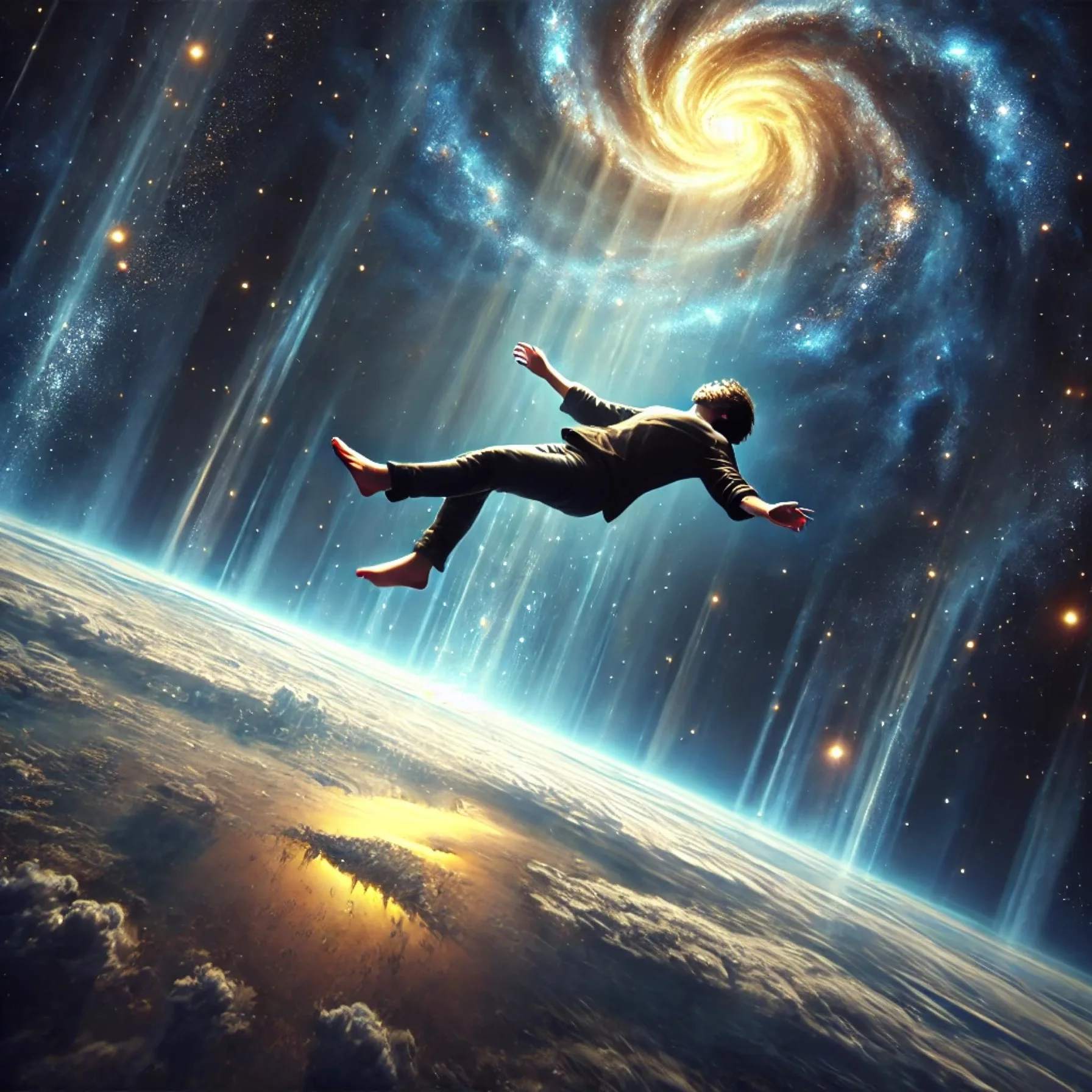
You're about to fall asleep. Your body relaxes, your thoughts dissolve... and suddenly: you fall. A violent jolt wakes you with a racing heart, rapid breathing, and the certainty that you just plummeted into the void from somewhere you can no longer remember.
If this has happened to you, you're not alone. About 70% of people experience this sensation at least once in their lives, and 10% experience it regularly. It's one of the most universal sleep phenomena, and it has a fascinating explanation that blends neuroscience, evolution, and psychology.
The Hypnic Jerk: What's Really Happening in Your Body
That jolt has a name: the hypnic jerk (also called a hypnagogic jerk or sleep start). It's not exactly a dream — it's an involuntary muscle contraction that occurs during the transition between wakefulness and sleep, in what scientists call the hypnagogic state — stage N1, the bridge between being awake and being asleep.
What you feel is a myoclonic spasm, similar to a hiccup but in your body's large muscles. It can affect your legs, arms, or entire torso, and frequently comes accompanied by a vivid sensation of falling, a flash of light, or even a loud sound that exists only in your head.
It's completely harmless. It doesn't indicate any neurological problem. It's simply your brain doing something strange during the transition to sleep.
Three Theories About Why It Happens
Science doesn't have a definitive answer, but there are three main theories, each fascinating in its own way.
The "Misinterpretation" Theory
When you fall asleep, your muscles relax deeply. Your brain, still partially active, can interpret this sudden relaxation as a signal that you're actually falling. In response, it sends an emergency signal — "Wake up! Brace yourself!" — that triggers the muscle contraction. It's as if your brain confuses releasing your muscles with releasing a railing.
The Evolutionary Primate Theory
Some evolutionary biologists propose that the hypnic jerk is a reflex inherited from our primate ancestors who slept in trees. If they relaxed too much or moved incorrectly during sleep, they could fall and die. The brain developed a safety mechanism: upon detecting excessive muscle relaxation during the sleep transition, it fires a jolt to "verify" you're still secure on your branch. Millions of years later, you still have that reflex even though you sleep in a bed.
The Paralysis Test Theory
During REM sleep, your body enters atonia — a temporary paralysis that prevents you from physically acting out your dreams. Some researchers believe the hypnic jerk is the brain "testing" whether sleep paralysis has kicked in, sending an electrical signal to muscles to see if they respond. If they still respond (because you're not yet in REM), the result is that jolt that wakes you up.
But Falling Dreams Are More Than a Spasm
The hypnic jerk explains the physical jolt when falling asleep. But there's another, different phenomenon: narrative falling dreams, where you fall from a building, a cliff, a bridge, or simply through an infinite void. These dreams occur during REM sleep and are purely psychological.
They're one of the most reported dream themes worldwide, and psychologists interpret them consistently.
Loss of Control
The most widespread interpretation is that dreaming of falling reflects a perceived loss of control in your life. Feeling overwhelmed by a project? A relationship becoming unstable? Financial uncertainty? Gravity anchors us; losing that anchor in dreams symbolizes feeling groundless.
Fear of Failure
"Falling from grace," "falling from the top" — language already connects falling with failure. These dreams may appear when you fear not meeting expectations, whether your own or others'.
Accumulated Stress
Falling dreams are significantly more frequent during periods of elevated stress. Your mind processes during sleep what it couldn't resolve during the day, and falling is one of the brain's most direct metaphors for tension.
What Changes the Meaning
Context matters. Falling into water may symbolize feeling emotionally overwhelmed. Falling from a building may connect to professional anxieties. Falling into a bottomless void may reflect a deeper existential sense of directionlessness.

Discover what your dreams mean with the wisdom of ancient cultures and artificial intelligence.

The Myth: "If You Hit the Ground, You Die"
There's a popular belief that if you touch the ground in a falling dream, you die in real life. This is completely false. Many people dream of landing — sometimes softly, sometimes with a bounce, sometimes transitioning to another scene. Waking up before impact is simply the biological response to the adrenaline spike from fear, not a signal of real danger.
What You Can Do If These Dreams Bother You
If hypnic jerks are frequent, factors that amplify them include stress, afternoon caffeine, intense evening exercise, sleep deprivation, and irregular sleep schedules. Reducing these factors usually decreases their frequency noticeably.
If narrative falling dreams disturb you, the most useful thing is to record them. Keeping a dream journal lets you identify patterns: when do they appear? What was happening in your life that day? Do you always fall from the same place? Patterns reveal what your mind is processing.
The Fall as an Invitation
Perhaps the most interesting thing about dreaming of falling is what that dream is asking of you. It's not a punishment or a sign of weakness. It's your mind saying, in the most visceral language it knows: something needs your attention.
Next time you dream of falling, instead of forgetting it, ask yourself: where am I falling from? What did I leave behind? And where am I landing?
SenseDreams analyzes your falling dreams with AI to help you understand what your mind and emotions are processing. Record the dream, receive a cultural and psychological interpretation, and discover the patterns behind your nights.

Explore the language of your dreams
AI-powered interpretations inspired by ancestral wisdom from cultures around the world.